Mise
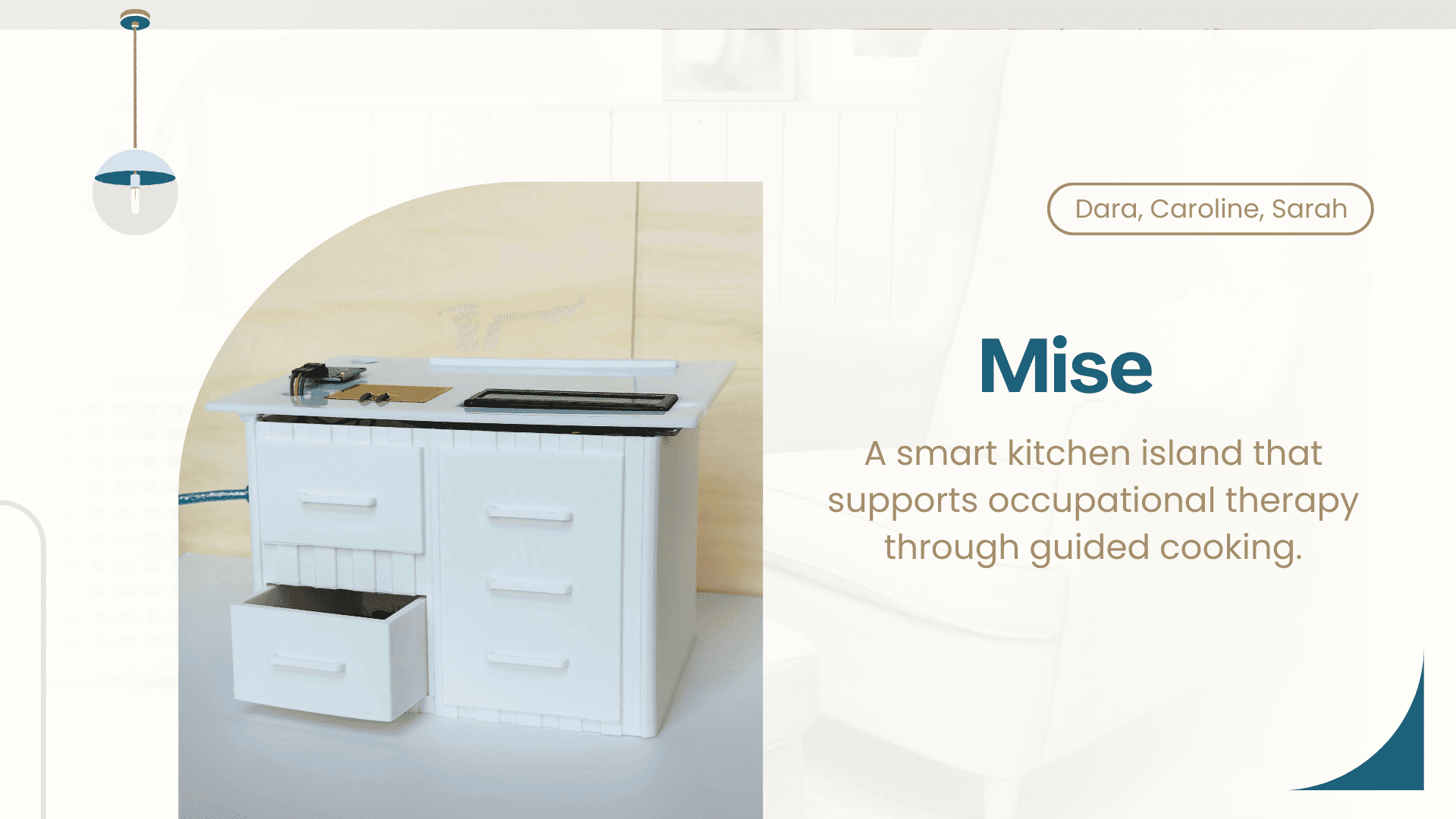
A smart kitchen island that supports occupational therapy through guided cooking.
2025
Year
Product Designer and Hardware
Role
Physical Product
Category
24 Hours
Duration
Problem
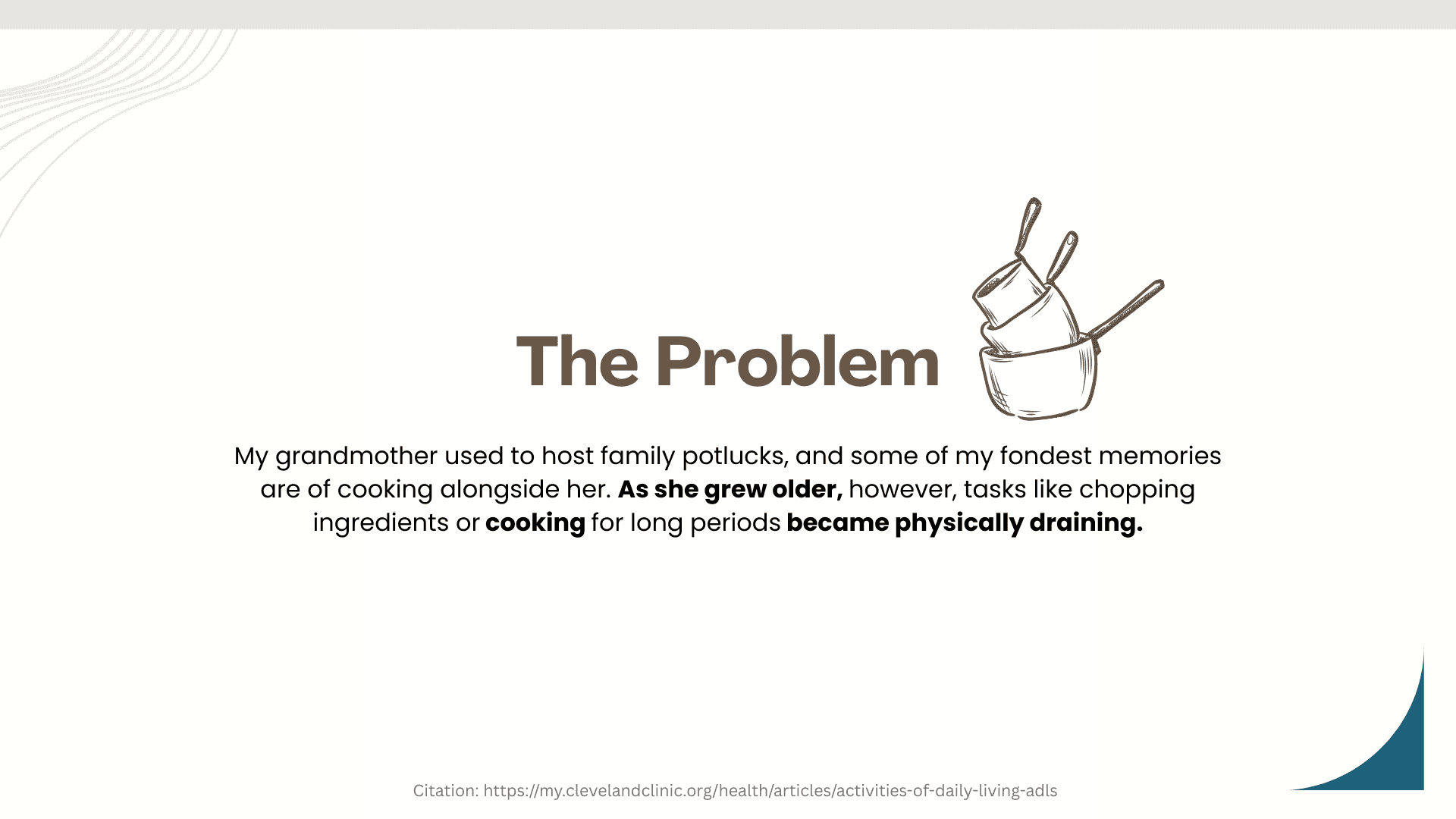
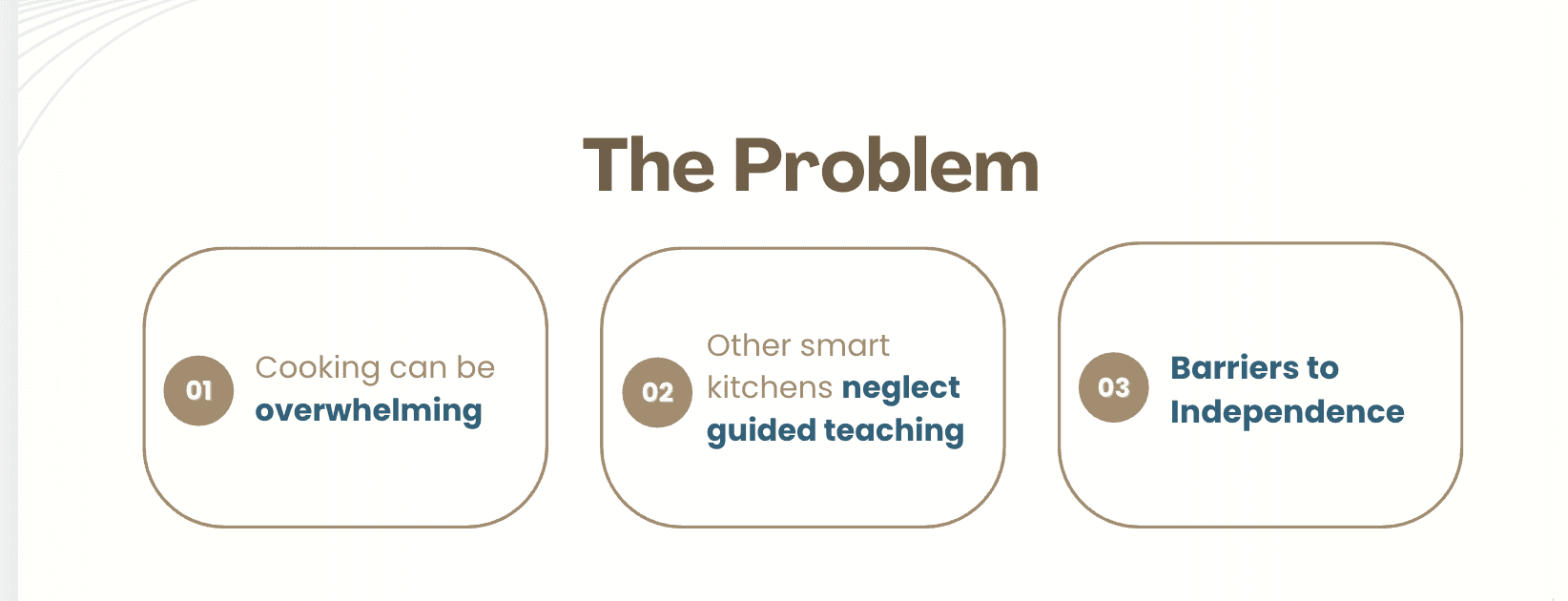
I would watch my grandma's love for cooking ever since I was a little child. Every year, multiple times a year, she would host huge family potlucks with dumplings, green onion ginger chicken, lumpia, fried rice, poke, and more. I would sit fondly by her side, tasked with folder dumplings and trading stories with her. However, as I watched her grow older, she simply became more physically drained and less motivated to cook, no matter how much joy it would bring her. Less and less food was homecooked and more often than not, our family potlucks became catered food.
Solution
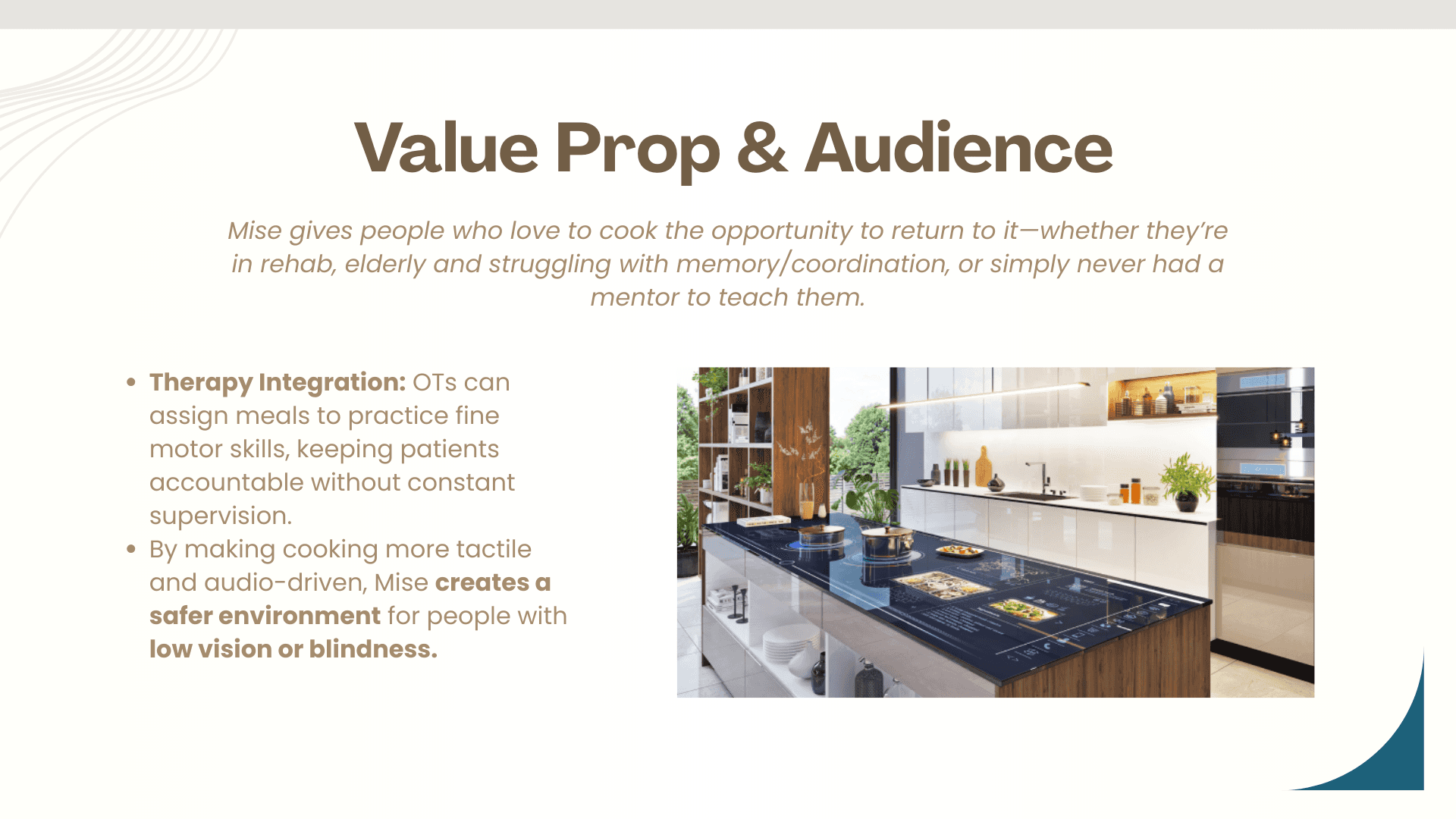
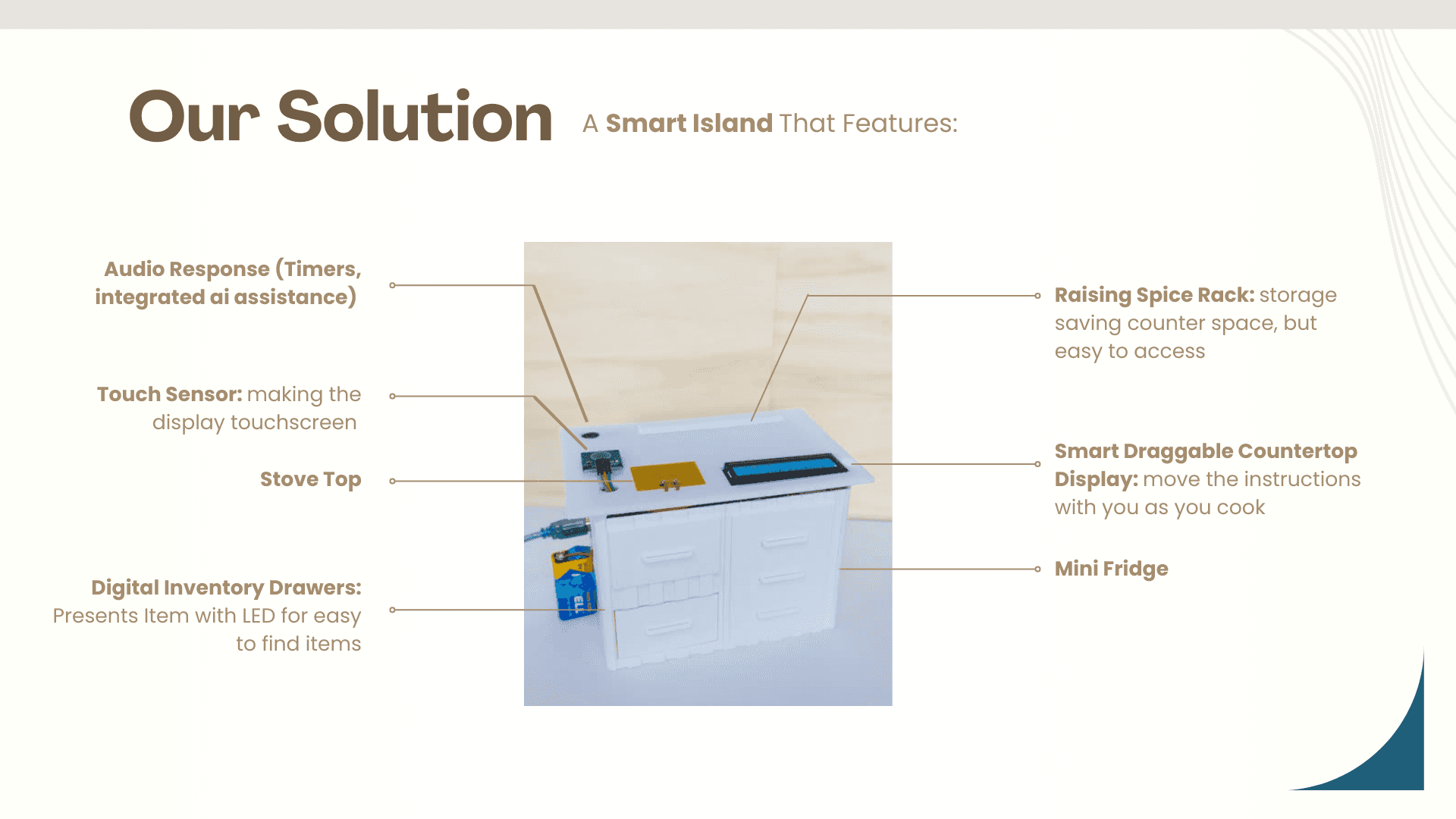
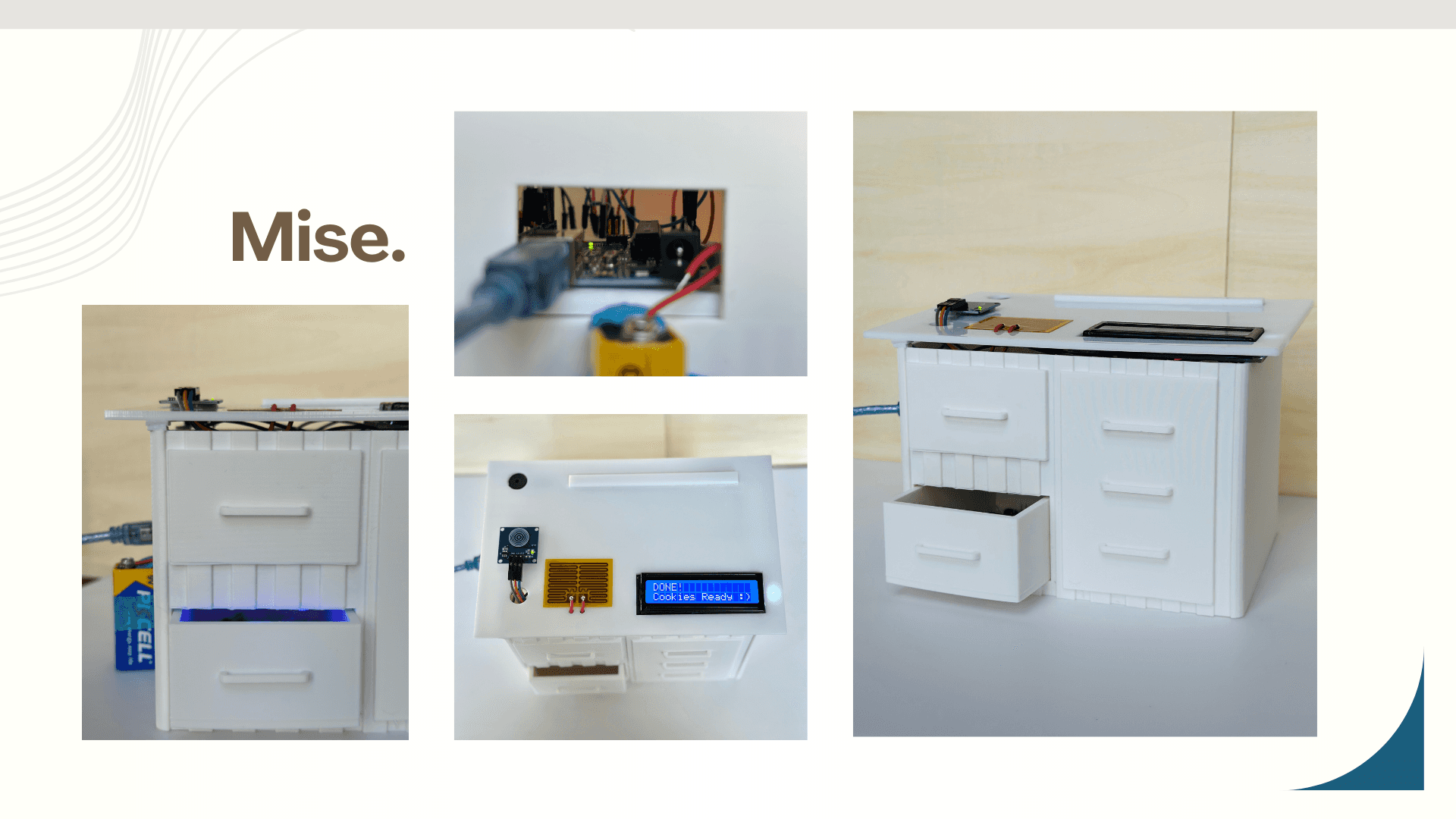
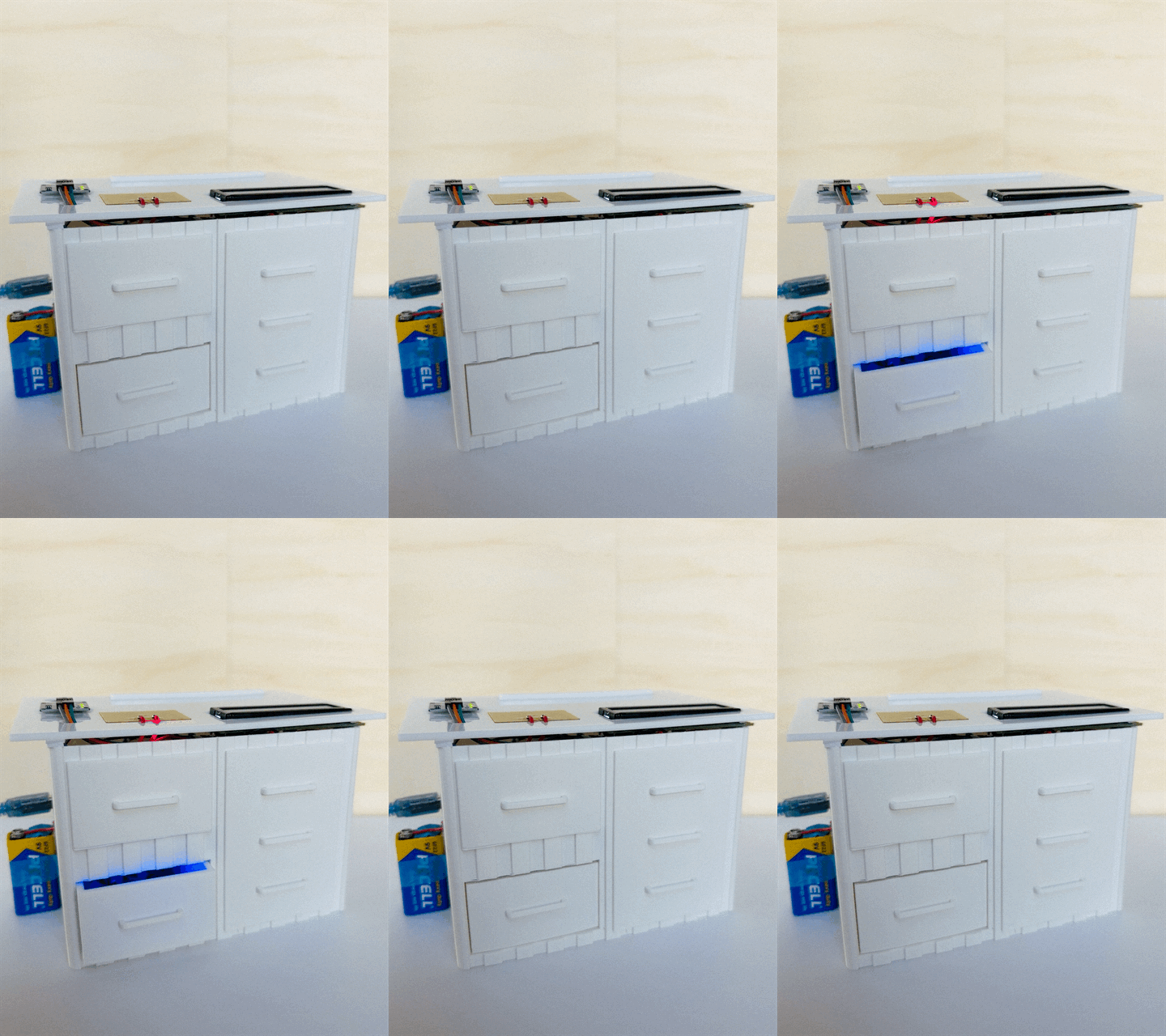
Mise is a guided kitchen system that supports people who want to cook but face physical, cognitive, or sensory barriers. It functions as an embedded instructor, walking users through recipes step by step through tactile prompts, audio guidance, and responsive storage. Digital inventory drawers keep track of ingredients and how long before they go bad with light and sound cues, integrated timers ensure you won't forget about anything in the over, and AI assistance reduces overall memory load during cooking. The system can also integrate with occupational therapy, allowing practitioners to assign specific meals that reinforce fine motor skills, coordination, or grip strength. Rather than replacing the act of cooking, Mise reduces the overwhelming feeling while preserving autonomy, ritual, and the satisfaction of making a meal by hand.
Ideation
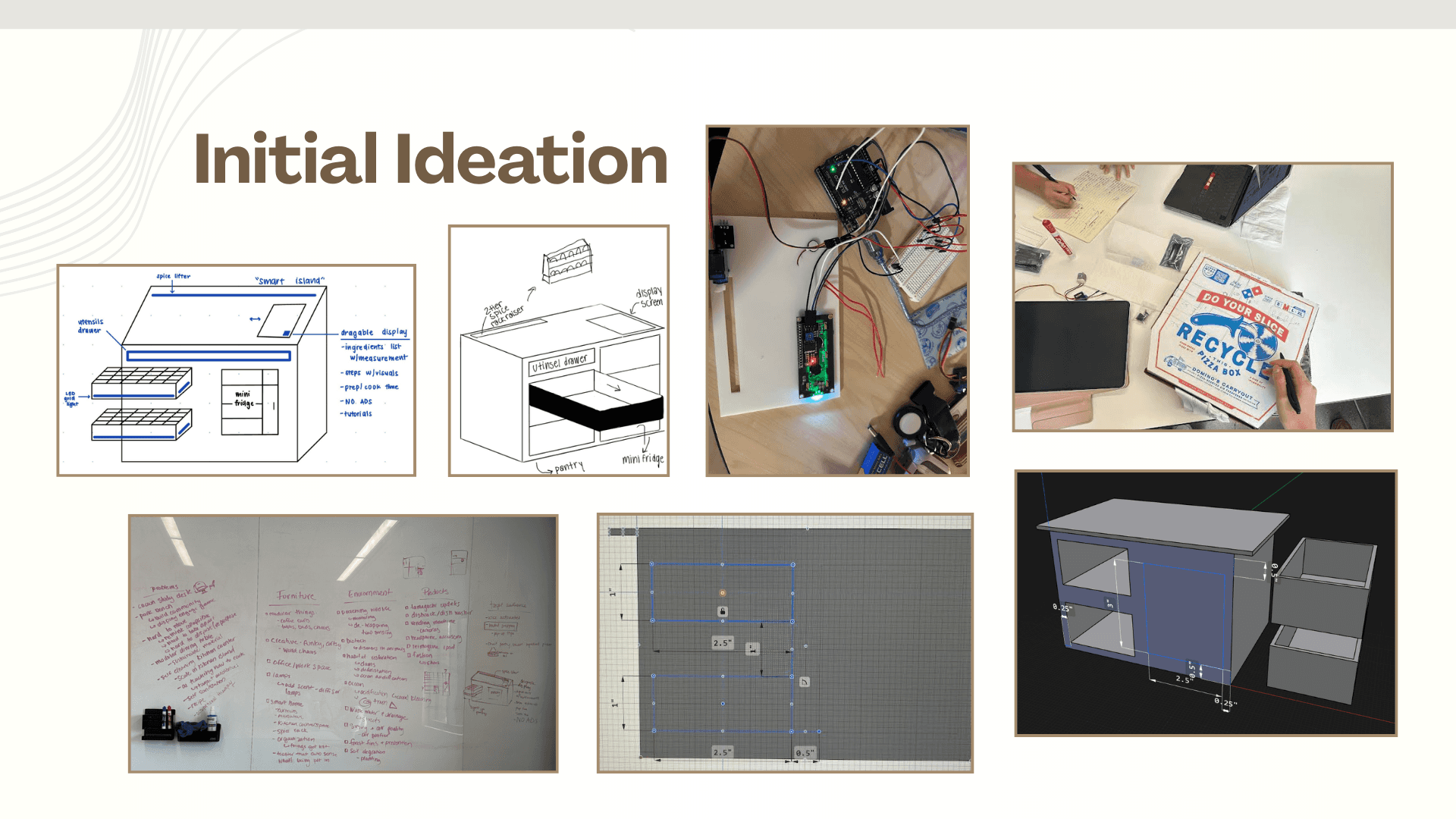
We had 3 different tracks we could go down: Environment, Health, or an Open - Just Anything Category (we were leaning towards toys or furniture if we ventured down this category).
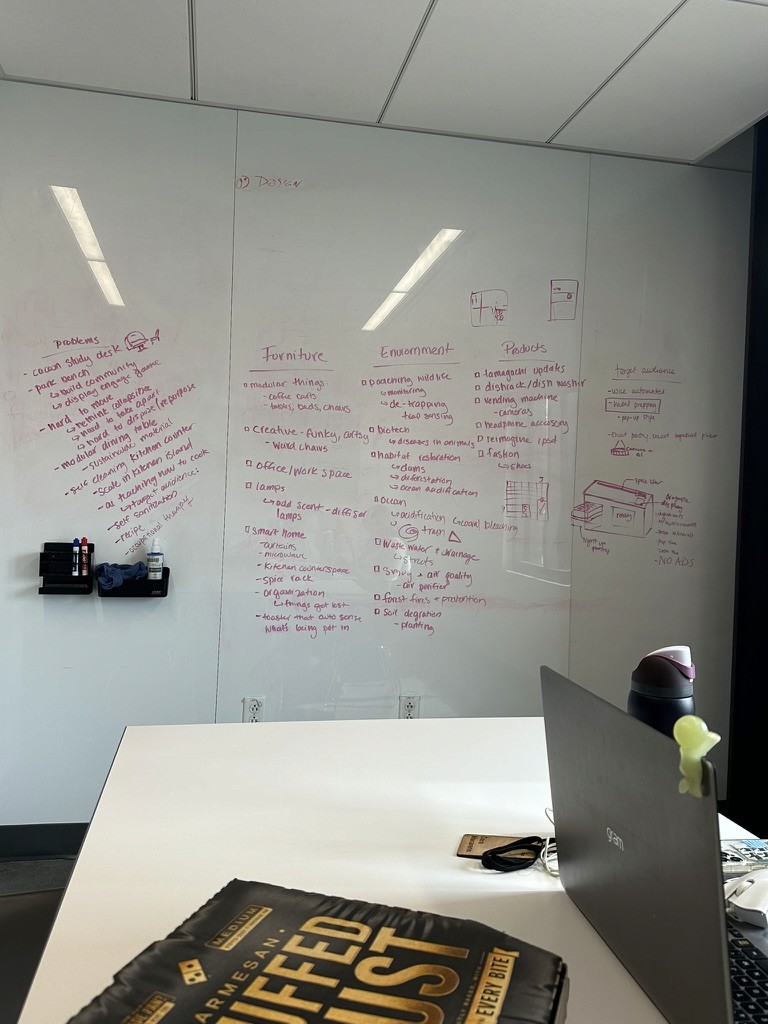
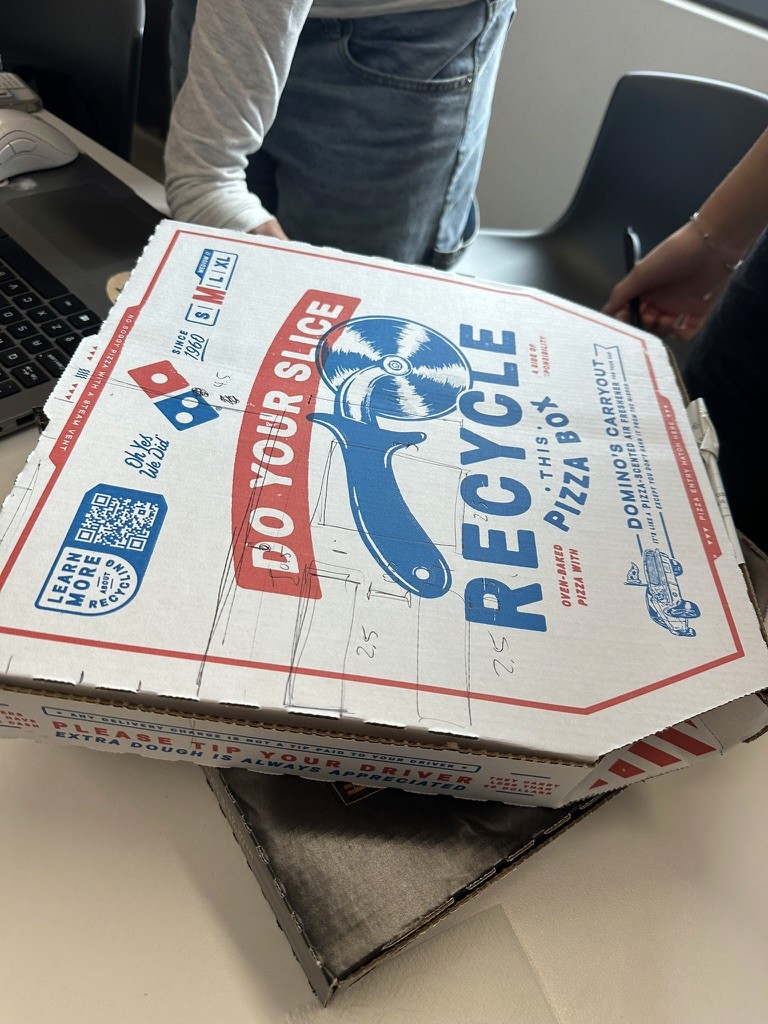
Funnily enough, our idea hit us on top of our Domino's pizza box after we fulfilled our starving stomachs and we decided we wanted to do something related to food: A Smart Kitchen Island.
My Role
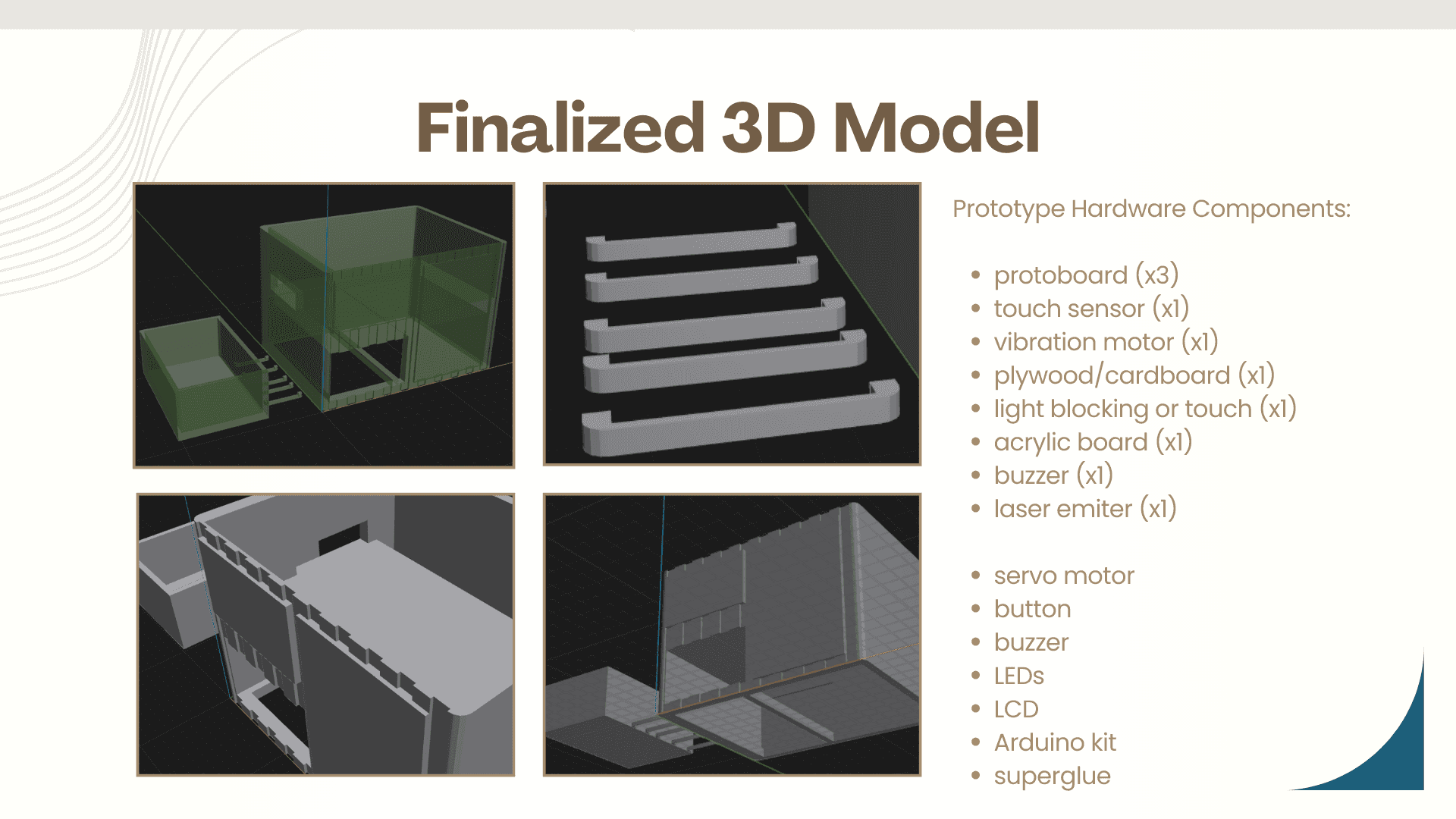
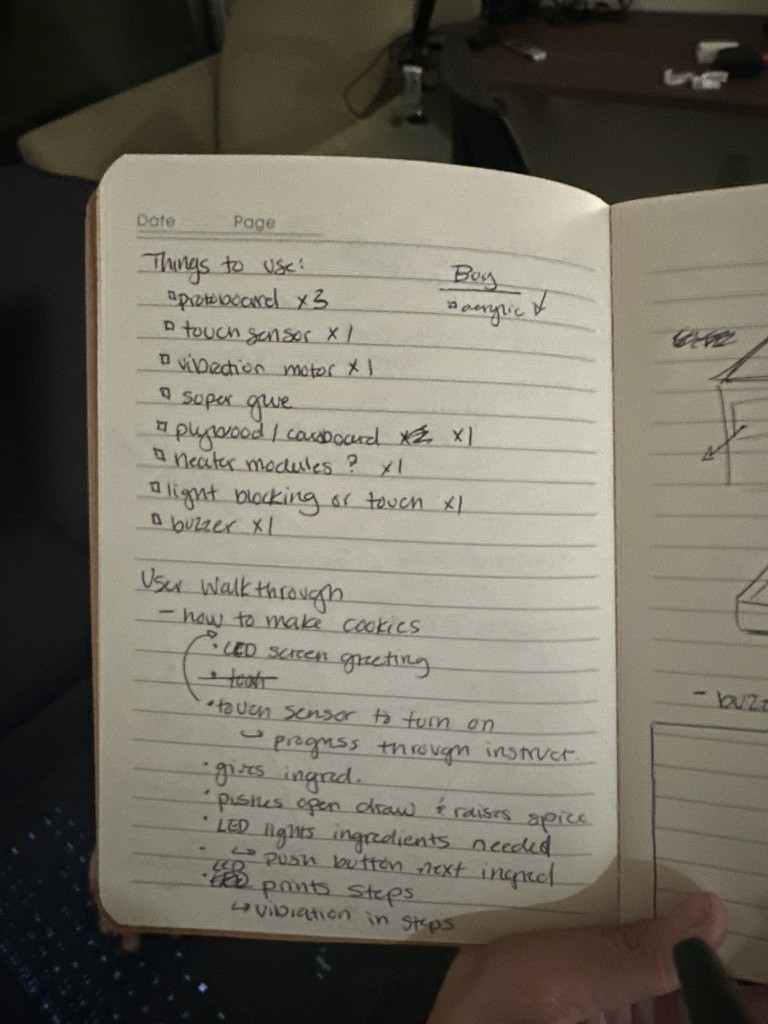
I led the development of the physical and embedded systems for Mise, translating the conceptual framework into a working spatial prototype. One of my teammates 3D modeled the initial base of the kitchen, and then I took it and edited it to fit our components and specific needs for electrical housing. I determined the overall footprint, component placement, and internal clearances to accommodate wiring, motors, and storage mechanisms. The housing was designed to balance accessibility with structural stability, ensuring each interactive element was reachable and legible within the workflow of cooking.
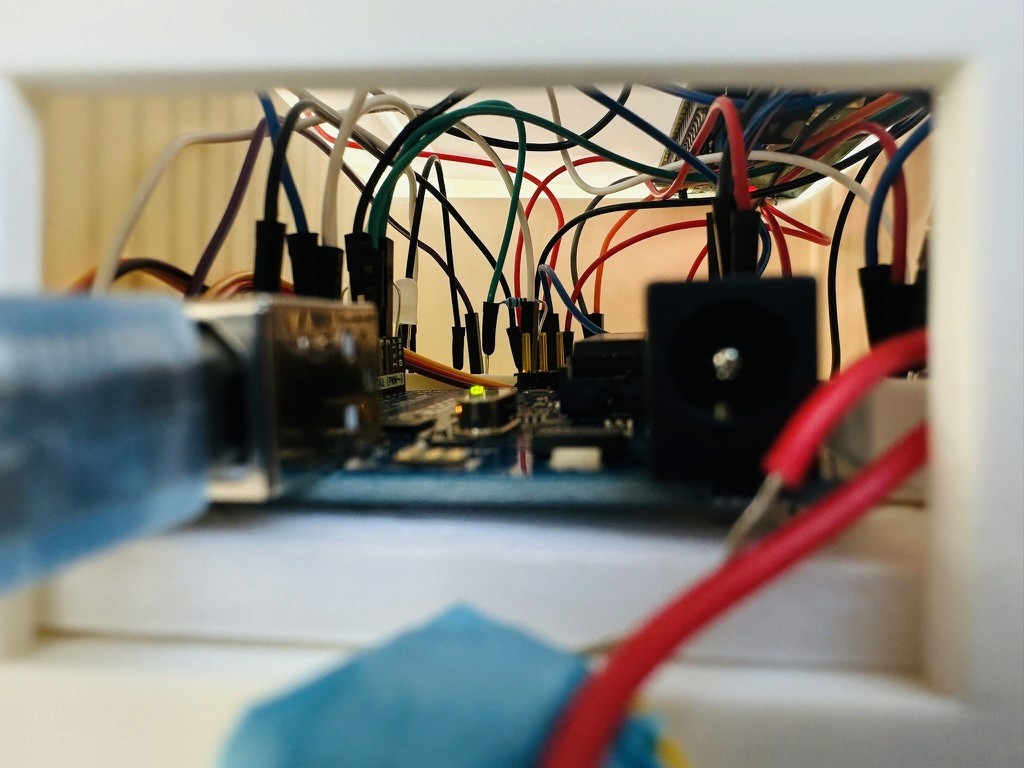
Then, I moved onto programming the system using Arduino, developing the logic for LED prompts, audio feedback, timers, and responsive drawer interactions. This required mapping user actions to physical outputs—when a recipe step is triggered, a drawer illuminates; when a timer completes, audio cues respond. I structured the code to support modular expansion, allowing additional components to be integrated without rebuilding the entire system architecture.
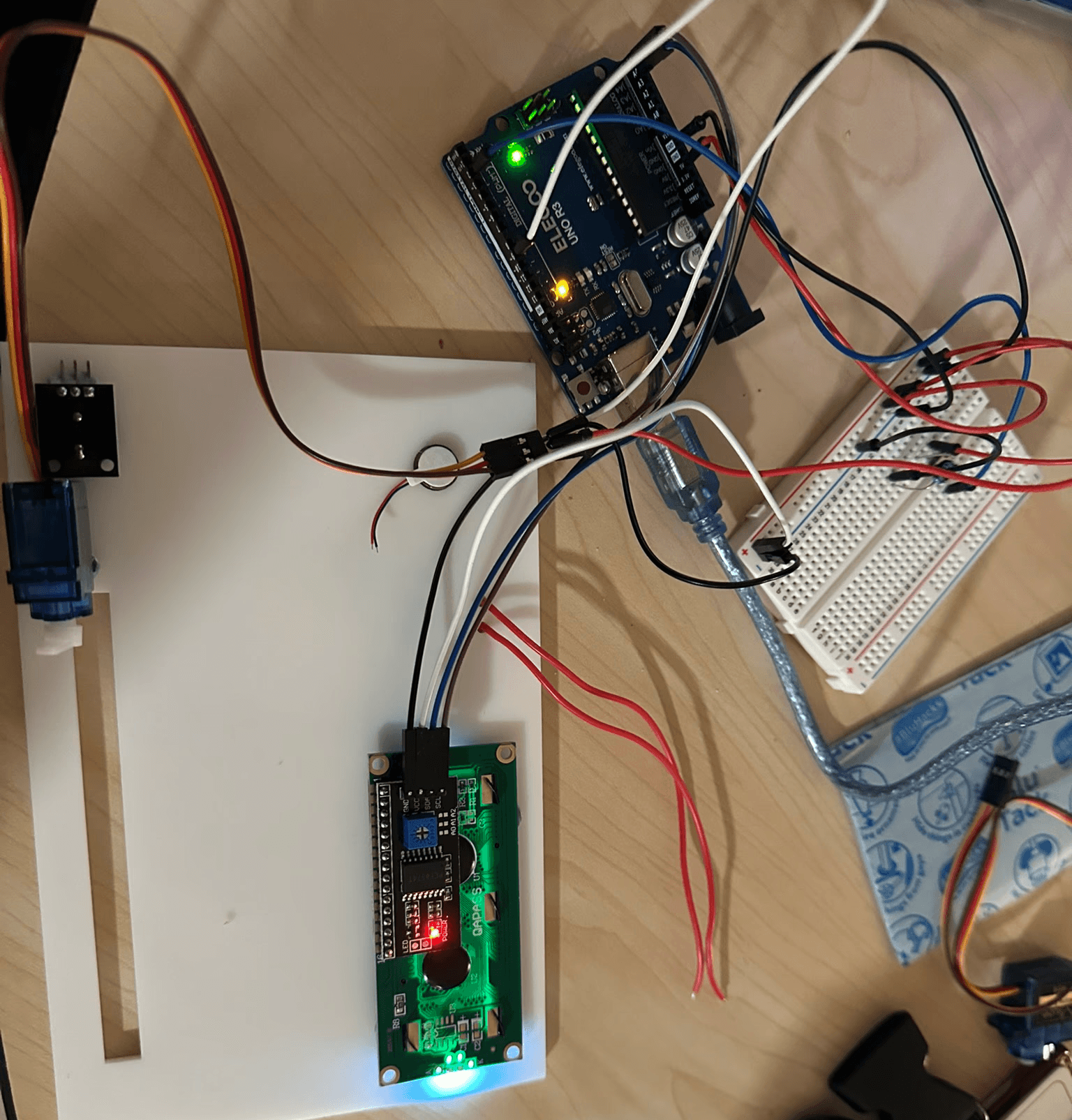
On the fabrication side, the acrylic tabletop was laser cut and designed precisely to seat all electronic components, switches, and lighting elements. The cut pattern accounted for wiring channels, fastening systems, and tolerances for clean assembly. I iterated between CAD and physical prototyping, refining dimensions as motors, sensors, and hardware were tested in place.
Pitch Deck